8 Powerful QR Code Call to Action Examples That Drive Scans in 2025
A QR code without a clear call to action (CTA) is just a pixelated square. It's the instruction - the 'Scan to Win,' 'View Our Menu,' or 'Connect with Us' - that transforms it from a passive graphic into an active gateway for engagement. This crucial piece of microcopy bridges the physical and digital worlds, telling users precisely what value they will receive by pulling out their phones. A powerful CTA eliminates hesitation and directly boosts scan rates, making it the single most important element next to the code itself.
The difference between a QR code that gets ignored and one that drives conversions often comes down to a few well-chosen words. Without context, users have no incentive to act. A compelling CTA, however, provides a clear reason, setting expectations and prompting immediate interaction. Whether you are using durable QR Code Stickers for a retail campaign or a digital display for an event, the right CTA is the engine that drives your results.
This guide moves beyond generic advice to provide a strategic blueprint you can adapt. We will deconstruct dozens of powerful qr code call to action examples from various sectors, analyzing the psychology behind why they work. You will get:
- Actionable Templates: Copy-and-paste CTA frameworks for different goals.
- Strategic Breakdowns: Analysis of what makes each example effective.
- Placement & Sizing Tips: Best practices to maximize visibility and scans.
We'll explore everything from restaurant menus and event ticketing to product packaging and payment systems, offering a comprehensive playbook to help you craft QR code experiences that don't just get noticed, but get scanned.
1. WiFi Connection QR Codes
One of the most practical and customer-centric qr code call to action examples is the WiFi Connection QR code. Instead of forcing visitors to find the network name, ask for a password, and manually type in complex credentials, this QR code automates the entire process. A quick scan connects the user's device directly to the designated WiFi network, dramatically improving the user experience in any physical location.
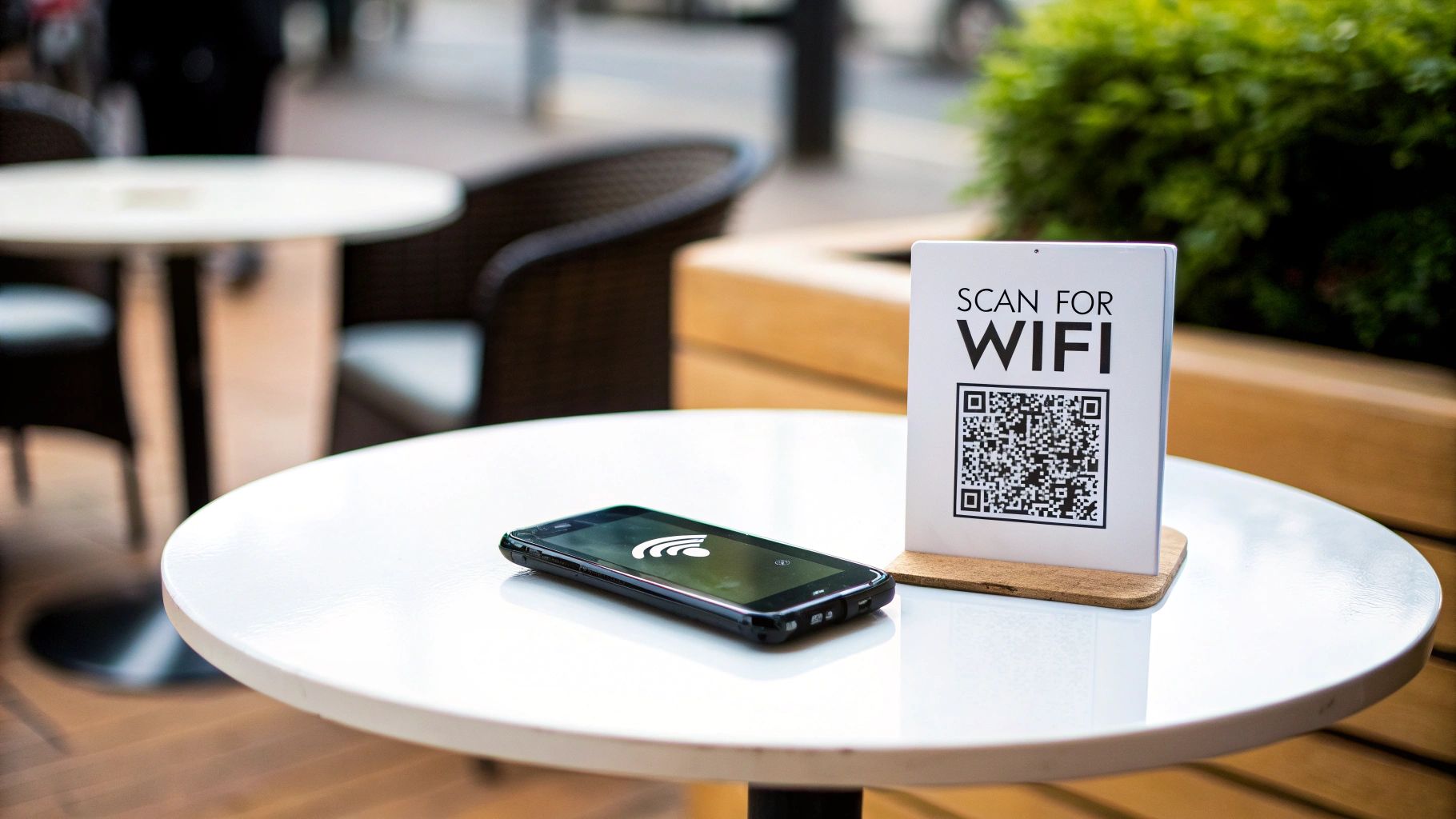
This method encodes the network's SSID (name), password, and security type (like WPA/WPA2) into the QR code. When a smartphone camera reads it, the operating system recognizes it as a WiFi configuration and prompts the user to join the network with a single tap.
Strategic Application & Benefits
The primary goal of a WiFi QR code is friction reduction. By removing a common annoyance, businesses can immediately create a positive impression. This is particularly effective in environments where customers are likely to stay for an extended period, such as cafes, hotel lobbies, co-working spaces, and event venues.
Key strategic benefits include:
- Enhanced Customer Experience: It provides an immediate, hassle-free utility that customers appreciate. This small convenience contributes significantly to overall satisfaction and brand perception.
- Increased Dwell Time: When customers can easily connect to WiFi, they are more likely to stay longer. For a coffee shop or restaurant, this can translate directly into more sales as patrons order additional items.
- Operational Efficiency: Staff members are no longer interrupted by constant requests for the WiFi password. This frees them up to focus on more critical, revenue-generating tasks.
Actionable Takeaways & Best Practices
To implement this effectively, focus on visibility and clarity. The call to action should be direct and benefit-oriented.
- CTA Copy Examples:
- "Free WiFi, No Password Needed. Just Scan!"
- "Scan to Connect Instantly"
- "Get Online Fast. Scan for Guest WiFi."
- Placement Strategy: Place codes in high-traffic, high-visibility areas where people naturally pause. Good locations include table tents, front counters, waiting area walls, and on the back of menus.
- Security Note: Use a separate guest network for public-facing QR codes. This isolates customer traffic from your internal business systems, protecting sensitive data like point-of-sale or private files.
2. Restaurant Menu & Ordering QR Codes
Perhaps the most widespread and recognized of all qr code call to action examples is the digital menu and ordering system for restaurants. This application surged in popularity as a contactless solution, allowing diners to access a full menu, view details, and often place their order directly from their smartphones. A simple scan of a code on the table launches a mobile-optimized menu, streamlining the entire dining experience.
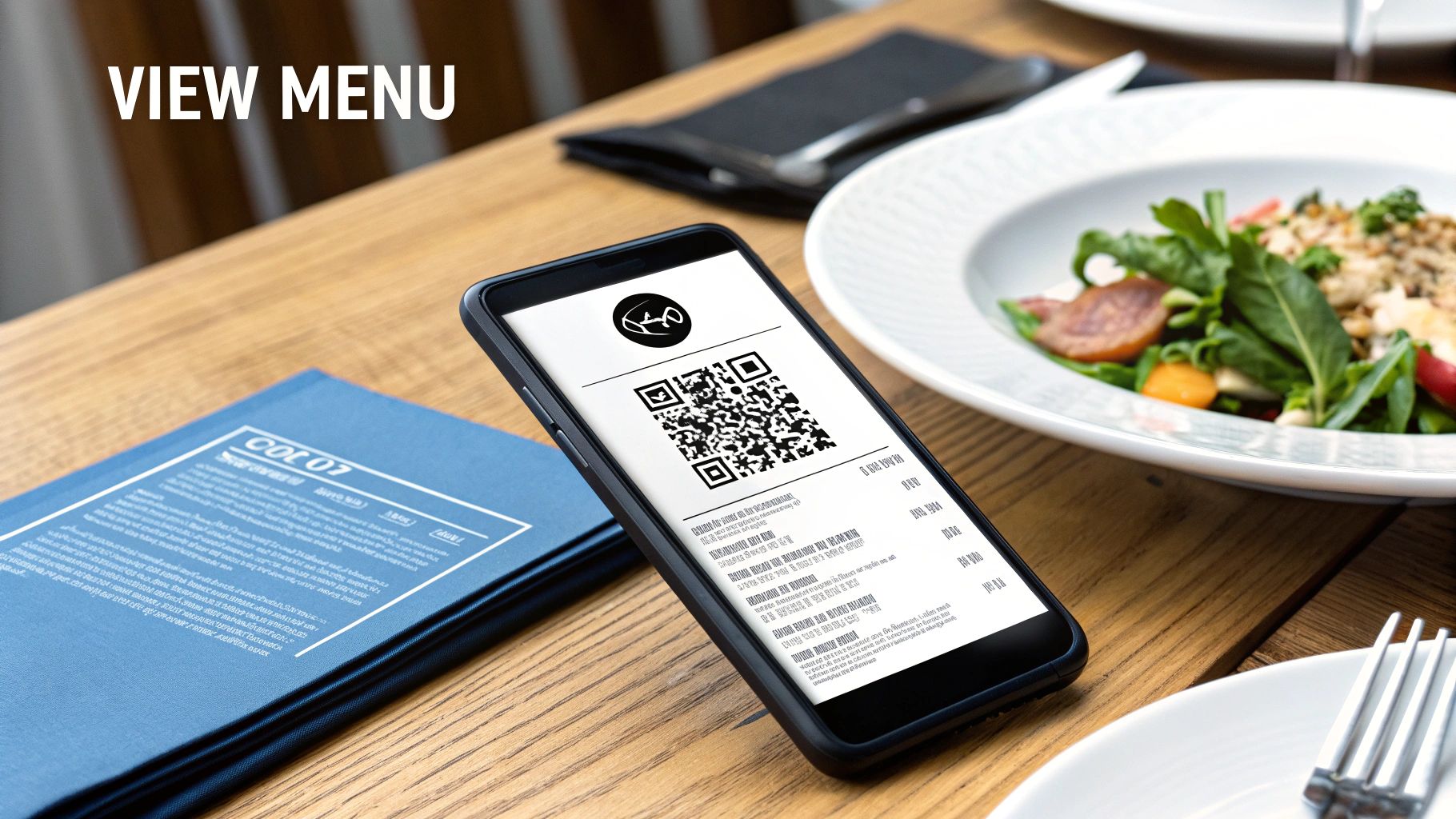
This system links a physical QR code to a URL hosting the digital menu. Modern point-of-sale (POS) systems like Toast or Square often have this functionality built-in, integrating ordering and payment directly into the digital menu. This creates a seamless flow from browsing to paying, all initiated by a single scan.
Strategic Application & Benefits
The core goal of a menu QR code is operational efficiency and enhanced customer control. By putting the menu and ordering power in the customer's hands, restaurants can reduce wait times, improve order accuracy, and turn tables faster, especially during peak hours.
Key strategic benefits include:
- Increased Order Value: Digital menus make it easy to showcase high-quality photos and tempting upsell suggestions like appetizers or desserts. This visual merchandising often encourages customers to order more than they would from a traditional text-based menu.
- Dynamic Menu Management: Restaurants can instantly update menu items, change prices, or mark dishes as "sold out" without the cost and delay of reprinting physical menus. This agility is crucial for managing inventory and promoting daily specials.
- Improved Staff Productivity: With customers placing their own orders, servers can focus on higher-value tasks like providing recommendations, ensuring food quality, and delivering a better overall guest experience rather than just taking orders.
Actionable Takeaways & Best Practices
To maximize the effectiveness of this system, the user experience must be flawless. A poorly designed digital menu can cause more frustration than a paper one.
- CTA Copy Examples:
- "Scan to View Menu & Order"
- "Hungry? Scan Here for Our Menu"
- "Your Table's Menu. Scan to Begin."
- Placement Strategy: Place a durable, high-quality QR code on every table in a highly visible, fixed location. Table tents, small plaques, or stickers in the center of the table work best. Also, consider placing one at the host stand for waiting guests.
- Design for Mobile: The digital menu must be easy to read and navigate on a small screen. Use large fonts, clear categories, high-quality images, and a simple, intuitive ordering process with minimal clicks. Always provide a backup plan, like a few physical menus, for less tech-savvy guests or in case of technical issues.
3. Event Ticketing & Registration QR Codes
Streamlining event entry is a critical challenge, and one of the most effective qr code call to action examples to solve it is for ticketing and registration. This system replaces traditional paper tickets with unique QR codes assigned to each attendee. The code, containing encrypted ticket information and attendee data, is scanned at the entrance to grant access, dramatically speeding up check-in and reducing fraud.
Platforms like Eventbrite and Ticketmaster have made this technology standard for millions of events, from massive festivals like Coachella to corporate tech summits. When scanned, the QR code is instantly verified against a database, providing a secure and nearly instantaneous entry process that eliminates long queues and manual list-checking.
Strategic Application & Benefits
The primary objective of a ticketing QR code is operational efficiency and security. By automating the validation process, event organizers can manage large crowds with fewer staff and greater accuracy, while also gathering valuable, real-time attendance data.
Key strategic benefits include:
- Accelerated Entry Flow: Scanning a QR code takes seconds, drastically reducing wait times and improving the initial attendee experience. This is crucial for large-scale events where managing crowd flow is a top priority.
- Enhanced Security: Unique, single-use, or dynamic QR codes are difficult to counterfeit, preventing unauthorized entry and ticket duplication. Ticketmaster's "SafeTix" system, for example, uses a dynamic code that refreshes every few seconds to thwart screenshots.
- Data Collection & Analytics: Each scan provides a digital timestamp, giving organizers precise data on arrival times, no-show rates, and peak entry periods. This insight is invaluable for planning future events and optimizing logistics.
Actionable Takeaways & Best Practices
To ensure a seamless check-in experience, the focus should be on preparation, communication, and robust technology.
- CTA Copy Examples:
- "Your Ticket to Entry. Have this QR Code Ready to Scan."
- "Skip the Line! Scan Your QR Code for Fast Entry."
- "Present this QR Code at the Gate for Admission."
- Placement Strategy: The QR code should be the most prominent element on the digital or printed ticket. Send reminder emails and app notifications shortly before the event, prompting attendees to have their QR code easily accessible on their phones.
- Contingency Planning: Internet connectivity can be unreliable at large venues. Implement a system with offline scanning capabilities that syncs data once a connection is re-established. Train staff thoroughly on the scanning equipment and manual check-in procedures for any edge cases.
4. Product Authentication & Anti-Counterfeiting QR Codes
A powerful and trust-building use of QR codes is for product authentication. This involves placing a unique, often single-use, QR code on product packaging that links to a secure database. Customers scan the code to instantly verify that their purchase is genuine, a crucial feature for high-value items prone to counterfeiting like luxury goods, pharmaceuticals, and electronics.
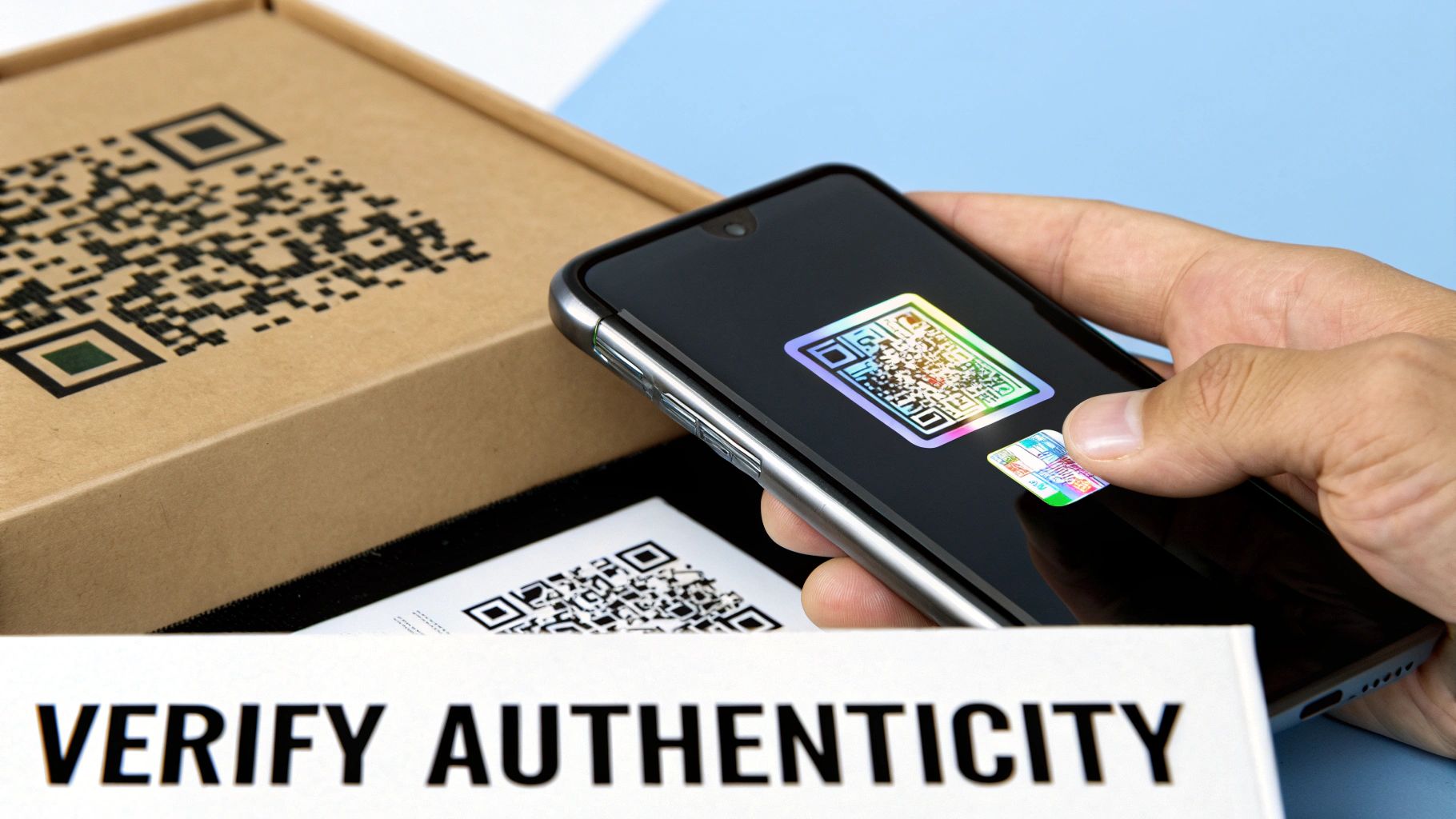
This system works by generating a distinct QR code for each individual item during production. When scanned, the code queries a verification system that confirms its authenticity, often displaying product details and confirming it hasn't been scanned before. This process provides a direct line of communication between the brand and the end-user, building confidence at the most critical point of the customer journey.
Strategic Application & Benefits
The primary goal here is to build consumer trust and protect brand integrity. By empowering customers to verify authenticity themselves, companies can directly combat the gray market, protect revenue, and assure customers of product quality and safety. This is a vital strategy in industries where counterfeit goods pose significant financial or health risks.
Key strategic benefits include:
- Enhanced Brand Protection: It actively deters counterfeiters and gives brands a tool to track and manage their supply chain, identifying where illicit products might be entering the market.
- Increased Consumer Confidence: Customers feel more secure in their purchase, especially for high-ticket items. This assurance can be a deciding factor in the buying process and fosters long-term loyalty.
- Direct-to-Consumer Engagement: The verification landing page offers a new marketing touchpoint. Brands can use this space to share product stories, offer registration for warranties, or cross-sell related items.
Actionable Takeaways & Best Practices
To implement an authentication system, the process must be seamless for the user and secure for the brand. The call to action should clearly communicate the benefit of scanning.
- CTA Copy Examples:
- "Is it Genuine? Scan to Verify."
- "Confirm Authenticity Here"
- "Scan for Peace of Mind. Ensure Your Product is Real."
- Placement Strategy: The QR code must be easy to find and scan, often placed near the product's serial number or under a scratch-off security label. For pharmaceuticals or spirits, it might be part of a tamper-evident seal.
- Security Note: Use dynamic QR codes linked to a secure, encrypted database. For extremely high-value goods, integrate the QR code with other security features like holograms or consider blockchain technology to create an immutable record of authenticity.
5. Social Media & Contact Information QR Codes
One of the most powerful networking and brand-building qr code call to action examples is the Social Media & Contact Information QR code. This method streamlines the process of sharing professional details or growing an online following. Instead of manually searching for a profile or typing contact information from a physical card, a user can scan the code to instantly follow, connect, or save a contact to their device.
This approach commonly uses two formats: a direct link to a social media profile (like Instagram, LinkedIn, or TikTok) or a vCard file. A vCard QR code contains comprehensive contact details, including name, phone number, email, and website. When scanned, it prompts the user to save the information directly to their phone's address book, eliminating manual entry and potential errors.
Strategic Application & Benefits
The core purpose here is instantaneous connection. In a fast-paced networking environment like a conference or a brief retail interaction, making it effortless to connect is a significant competitive advantage. This turns a fleeting encounter into a lasting digital relationship.
Key strategic benefits include:
- Seamless Networking: It modernizes the traditional business card exchange. A single scan on a badge or phone screen is faster and more reliable than collecting dozens of paper cards that might get lost.
- Audience Growth Acceleration: For influencers, creators, and brands, placing a "Follow Us" QR code on packaging, event banners, or in-store signage provides a direct, low-friction path to increasing their social media audience.
- Enhanced Professional Image: Using a dynamic vCard QR code signals that an individual or business is tech-savvy and forward-thinking. It leaves a memorable, modern impression on potential clients and partners.
Actionable Takeaways & Best Practices
To maximize effectiveness, the call to action must clearly communicate the outcome of the scan. Customization and testing are also crucial.
- CTA Copy Examples:
- "Connect with me on LinkedIn. Scan here."
- "Follow our journey on Instagram!"
- "Scan to Save My Contact Info."
- Placement Strategy: For networking, place QR codes on business cards, event name badges, or as a saved image on your phone's lock screen. For audience growth, use them on product packaging, receipts, storefront windows, and presentation slides.
- Use Dynamic Codes: A dynamic QR code for a vCard or social link allows you to update the destination URL or contact information later without having to reprint all your materials. This is essential for keeping your connections current.
6. Promotional & Discount Code QR Codes
Among the most powerful qr code call to action examples for driving immediate sales is the Promotional & Discount Code QR code. This tactic directly bridges the gap between marketing exposure and customer conversion by delivering an instant incentive. A quick scan can unlock an exclusive discount, reveal a special offer, or enter a customer into a contest, making it a highly effective tool for marketers.
This method typically links to a mobile-optimized landing page where a unique discount code is displayed or automatically applied at checkout. Brands like Coca-Cola have pioneered this with large-scale "Scan to Win" campaigns, while retailers like H&M use them in-store to encourage purchases and app downloads.
Strategic Application & Benefits
The primary goal of a promotional QR code is incentivizing action. By offering a tangible, immediate reward, businesses can overcome purchase hesitation, drive foot traffic, and capture valuable marketing data. This strategy is incredibly versatile and can be adapted for print ads, product packaging, and in-store displays.
Key strategic benefits include:
- Increased Conversion Rates: Offering an exclusive discount directly at the point of consideration is a proven method to boost sales. The seamless nature of scanning a QR code reduces friction in the redemption process.
- Measurable Campaign ROI: Dynamic QR codes allow marketers to track scan rates, redemption numbers, and user demographics. This data provides clear insights into campaign performance and helps optimize future promotions.
- Enhanced Customer Engagement: Interactive campaigns, like a "scan to reveal a mystery discount," create a more engaging and memorable brand experience than a static advertisement.
Actionable Takeaways & Best Practices
To maximize the impact of your promotional QR codes, the value proposition must be clear, compelling, and urgent.
- CTA Copy Examples:
- "Scan Now for 20% Off Your Purchase!"
- "Unlock a Secret Deal. Scan to Reveal."
- "Scan Here for an Exclusive BOGO Offer."
- Placement Strategy: Place codes where customers are making purchasing decisions. This includes product packaging, shelf talkers, restaurant menus, window displays, and direct mail flyers. In digital formats, use them in email newsletters and social media posts.
- Technical Note: Always use dynamic QR codes for promotions. This allows you to update the discount or landing page link without reprinting materials, giving you the flexibility to A/B test offers or end a campaign early.
7. Educational Content & Learning Resource QR Codes
One of the most transformative qr code call to action examples is linking physical educational materials to dynamic digital content. Instead of static textbooks and worksheets, this QR code bridges the gap between print and interactive learning. A quick scan can transport a student from a textbook page to a supplementary video, an interactive quiz, or an in-depth research paper, creating a richer, multi-modal educational experience.
This method embeds a URL into a QR code placed within educational content. When scanned, it immediately directs the learner to a relevant online resource. This is used extensively by modern publishers like Pearson and platforms like Khan Academy to augment their traditional materials and cater to diverse learning styles.
Strategic Application & Benefits
The primary goal here is learning enhancement and engagement. By providing instant access to supplementary materials, educators can deepen understanding, accommodate different learning paces, and make lessons more interactive and memorable. This strategy transforms passive reading into an active exploration of a subject.
Key strategic benefits include:
- Deeper Engagement: Interactive elements like videos, simulations, and quizzes hold student attention far more effectively than text alone. This active participation can significantly improve information retention and comprehension.
- Personalized Learning: QR codes can link to resources of varying difficulty, allowing students to either review foundational concepts or explore advanced topics based on their individual needs, fostering a self-paced learning environment.
- Content Currency: Printed materials become outdated quickly. QR codes allow educators to link to the most current research, news, and data, ensuring the curriculum remains relevant without needing to reprint entire textbooks.
Actionable Takeaways & Best Practices
To successfully integrate QR codes into learning, the call to action must be clear, and the resources must be accessible and valuable.
- CTA Copy Examples:
- "Scan to Watch the Experiment in Action!"
- "Stuck? Scan for a Video Tutorial."
- "Explore Further: Scan to Read the Full Study."
- Placement Strategy: Place codes directly adjacent to the concept they relate to. For example, next to a diagram in a science book, at the end of a chapter for a summary quiz, or within a worksheet for a hint.
- Accessibility Note: Always ensure the linked digital content is mobile-friendly and meets accessibility standards (e.g., videos have captions). Regularly check that all links are active and lead to the correct resources, as broken links can quickly cause student frustration.
8. Payment & Contactless Transaction QR Codes
One of the most transformative qr code call to action examples is the use of QR codes for payments and contactless transactions. This method streamlines the checkout process by allowing customers to pay directly from their mobile devices without needing a physical card or cash. A quick scan of a QR code presented at the point of sale initiates a secure transaction through a digital wallet or banking app.
This technology, popularized by giants like Alipay and WeChat Pay in Asia, is now globally adopted by platforms like PayPal, Square, and various national systems like India's UPI. The QR code can be either static (a fixed code for the business) or dynamic (a unique code generated for each specific transaction amount), offering flexibility for different business models.
Strategic Application & Benefits
The primary goal of a payment QR code is to offer a fast, secure, and touch-free checkout experience. By simplifying the final step of the customer journey, businesses can reduce friction, speed up lines, and cater to the growing consumer preference for digital wallets. This is highly effective in retail stores, restaurants, market stalls, and service-based businesses.
Key strategic benefits include:
- Accelerated Transactions: Scanning a QR code is often faster than inserting a chip card or counting cash. This significantly reduces customer wait times, improves throughput during peak hours, and enhances overall operational efficiency.
- Enhanced Security: QR code payments leverage tokenization and encryption within mobile payment apps, often making them more secure than traditional card swipes. This can reduce the risk of card-skimming fraud for both the customer and the business.
- Lower Transaction Costs: For many small businesses, QR code payment systems offered by fintech companies can have lower processing fees compared to traditional credit card merchant services, directly impacting the bottom line.
Actionable Takeaways & Best Practices
To successfully implement QR code payments, the process must be seamless and trustworthy. The call to action should be clear, simple, and direct.
- CTA Copy Examples:
- "Scan to Pay Here"
- "Pay with Your Phone. Fast & Secure."
- "Skip the Line. Scan & Go."
- Placement Strategy: Display codes prominently at the point of sale, such as on the counter, on the payment terminal screen, or printed directly on the bill or invoice. Ensure they are well-lit and easily scannable.
- Security Note: Always use reputable payment processors. Educate staff to watch for QR code tampering, where fraudulent stickers are placed over legitimate ones. Regularly test the payment flow to ensure it directs to your official payment gateway and consider using dynamic, single-use QR codes for higher-value transactions.
8 QR Code Call-to-Action Examples Compared
| Title | Implementation Complexity 🔄 | Resource Requirements ⚡ | Expected Outcomes 📊 | Key Advantages ⭐ | Tips & Ideal Use Cases 💡 |
|---|---|---|---|---|---|
| WiFi Connection QR Codes | Low — simple QR generation and printing | Low — signage, occasional reprints | Faster guest onboarding; fewer support requests | Seamless connectivity; no app required | Place at entrances/tables; hospitality, events; update QR when password changes |
| Restaurant Menu & Ordering QR Codes | Medium — POS/menu integration and testing | Medium — digital menu platform, payments, staff training | Reduced printing costs; faster ordering; ordering analytics | Real-time menu updates; improved order accuracy | Display on each table; provide paper backup; optimize mobile UX |
| Event Ticketing & Registration QR Codes | Medium–High — unique codes, encryption, scanner workflow | High — scanning infrastructure, ticketing platform, training | Faster check‑in; fraud reduction; real‑time attendance data | Secure access control; scalability | Use unique/dynamic codes; offline scanning backup; instruct attendees |
| Product Authentication & Anti‑Counterfeiting QR Codes | High — per‑unit codes, DB/blockchain, tamper features | High — database, secure printing, supply‑chain integration | Reduced counterfeits; supply‑chain visibility; customer trust | Brand protection; warranty/recall support | Combine holograms; user‑friendly verification pages; educate customers |
| Social Media & Contact Information QR Codes | Low — vCard or simple redirect links | Low — design and print/digital placement | Faster contact exchange; increased followers; trackable scans | Sustainable; auto‑populate contacts; customizable | Use dynamic QR for updates; clear CTA (“Scan to Connect”); test devices |
| Promotional & Discount Code QR Codes | Low–Medium — dynamic codes and tracking setup | Medium — campaign management, landing pages, analytics | Higher conversions; measurable campaign ROI | Bridges offline→online; drives urgency | Use dynamic codes; clear value prop; track scans→redemptions |
| Educational Content & Learning Resource QR Codes | Medium — LMS/content linking and accessibility checks | Medium — hosting, content creation, teacher training | Increased engagement; immediate access to resources | Enables differentiated learning; progress tracking | Test links regularly; provide offline alternatives; label clearly |
| Payment & Contactless Transaction QR Codes | Medium–High — payment integration, security, compliance | Medium–High — payment provider, POS integration, compliance | Faster checkout; real‑time receipts; reduced contact | Secure mobile payments; lower card fees in some regions | Display clear “Scan to Pay”; prevent QR tampering; offer backup methods |
Putting Your QR Code Strategy into Action
We've explored a comprehensive array of qr code call to action examples, moving far beyond the simple black-and-white square to reveal a powerful, multifaceted marketing tool. From simplifying WiFi connections in a café to securing high-value products with anti-counterfeiting codes, the core principle remains consistent: a QR code's success is directly proportional to the clarity and value of its call to action. The difference between a scanned code and an ignored one often comes down to a few carefully chosen words.
The examples demonstrate that a QR code is not merely a link but a bridge. It connects the physical world to a digital experience, and the CTA is the signpost on that bridge, telling users exactly where they're going and why the journey is worthwhile. A generic "Scan Me" is a missed opportunity; a specific "Scan to View Menu & Order Now" is a conversion-focused directive.
Key Strategic Takeaways
Reflecting on the diverse applications we’ve covered, from event ticketing to educational resources, several universal truths emerge. Mastering these will elevate your QR code campaigns from functional to truly effective.
- Clarity Over Cleverness: Your primary goal is to eliminate ambiguity. The user should understand the outcome of scanning before they lift their phone. A CTA like "Get 20% Off Your First Order" is far more compelling than a vague "Special Offer Inside."
- Context is King: The most powerful CTAs are deeply integrated into their environment. A QR code on a product package should lead to content relevant to that product, such as "Scan for Setup Instructions" or "See How It's Made." A code on a restaurant table should facilitate the dining experience, not distract from it.
- Value Proposition First: Always answer the user's implicit question: "What's in it for me?" Whether the reward is a discount, exclusive content, saved time, or simplified access, this value must be immediately apparent.
Your Actionable Next Steps
Transforming these insights into tangible results requires a deliberate and iterative process. As you move forward, focus on these three critical steps to build and refine your QR code strategy.
- Define a Singular, Measurable Goal: Before you even generate a QR code, define what success looks like. Is it to increase social media followers, capture email sign-ups, or drive direct sales? Each goal demands a unique CTA. For example, a goal to grow your email list would benefit from "Scan to Join Our VIP Club & Get Exclusive Deals."
- A/B Test Your Calls to Action: Don't assume you know what will work best. Create two versions of a QR code sticker or print material with slightly different CTAs. One might say "Scan for Free Shipping," while another says "Unlock Free Delivery." Track the scan rates and conversion data for each to see which language resonates most powerfully with your audience. This data is invaluable for optimizing future campaigns.
- Optimize the Post-Scan Experience: The journey doesn't end with the scan; it begins. Ensure the destination landing page is mobile-friendly, loads quickly, and delivers precisely what the CTA promised. Any friction, such as a slow-loading page or a confusing interface, will negate the convenience of the QR code and lead to high bounce rates.
By consistently applying these principles, you move beyond using QR codes as a novelty and begin leveraging them as a sophisticated, data-driven tool for customer engagement and business growth. The diverse qr code call to action examples in this guide serve as your blueprint. Now it's time to build your own success, one strategic scan at a time.
Ready to put these strategies into practice with high-quality, durable materials? QR Code Stickers provides custom-printed, weather-resistant QR code stickers and signs designed to look professional and scan reliably in any environment. Visit QR Code Stickers to create the perfect physical touchpoint for your next brilliant digital campaign.
Article created using Outrank